
OPUS TOKYO EDITORIAL
Where is reception? When do you pay? Japan’s love hotels can be unfamiliar. Here is an introduction to some common arrangements.
When you arrive
Some properties use a conventional desk; others let guests choose a room on a screen. A sign reading kyūkei often means a short room stay, while shukuhaku generally means overnight accommodation. The exact hours and length of stay vary from hotel to hotel.
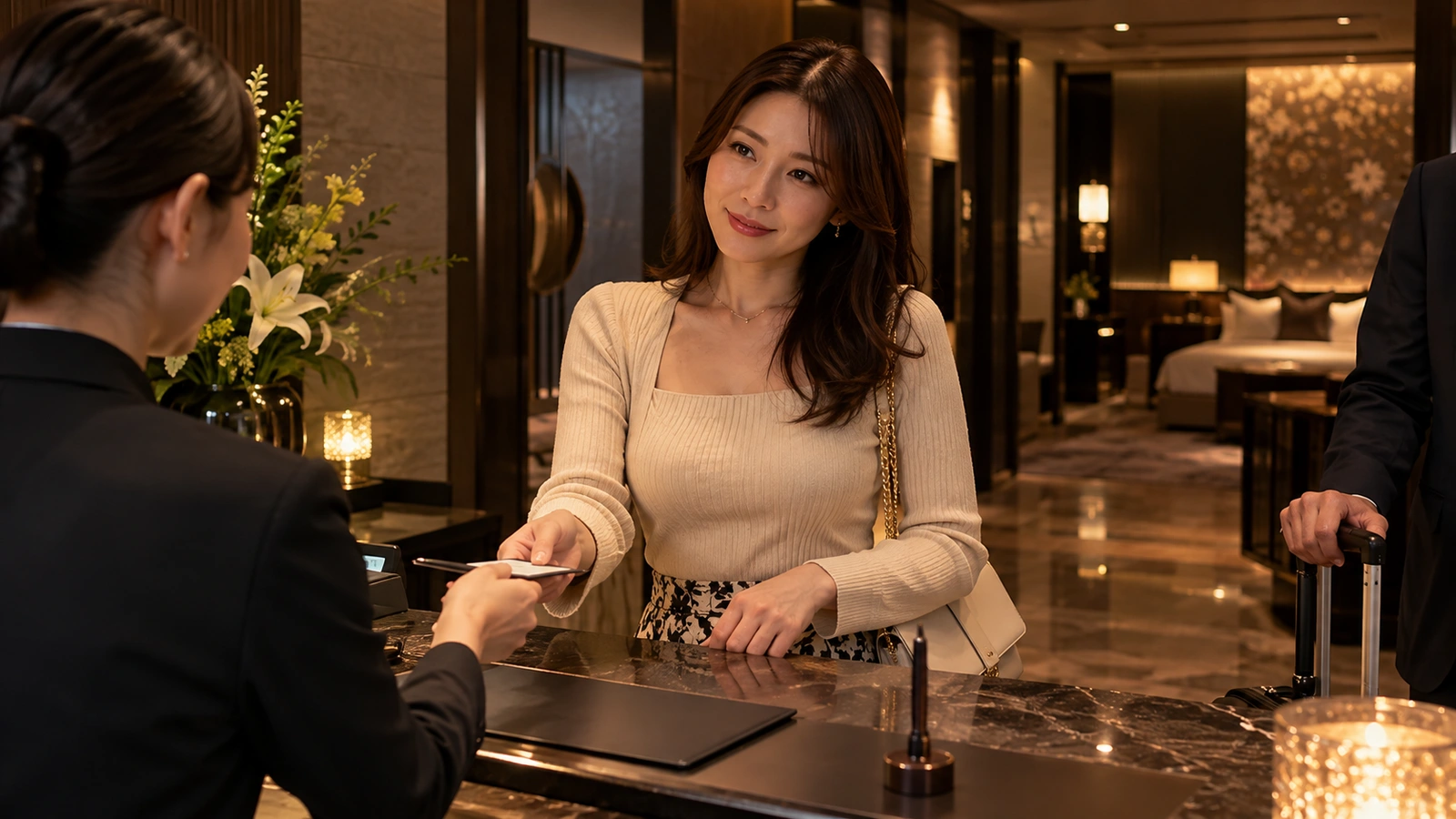
You can ask us about typical procedures before travelling. We can identify what is worth checking; the instructions at the actual property always govern how its systems work.
When you leave
Checkout may involve a machine in the room or payment at a desk. Rules for leaving temporarily and charges for extra time also vary. Your OPUS meeting may end at a different time from your hotel’s permitted room-use period.
So “My OPUS course is 120 minutes—should I book the room for exactly 120 minutes?” is an excellent question. We can help you understand the distinction, while the hotel confirms its own rules.
We want the evening to feel easy
Your memories should be about your time in Japan, not worrying at an unfamiliar machine. Please ask about anything you would like explained.